


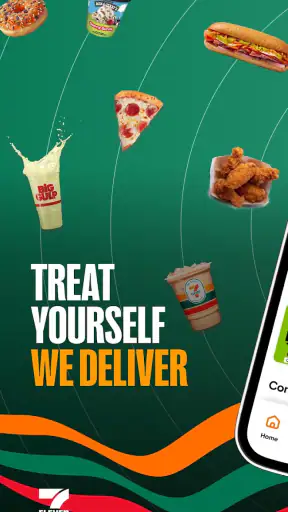
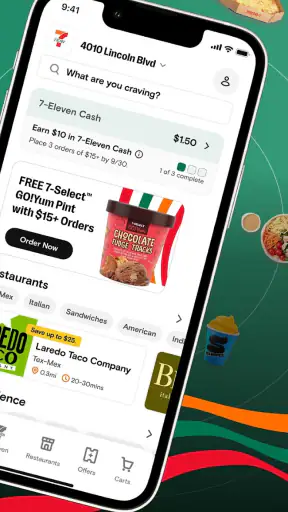
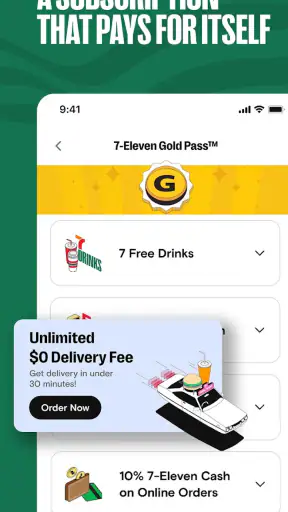
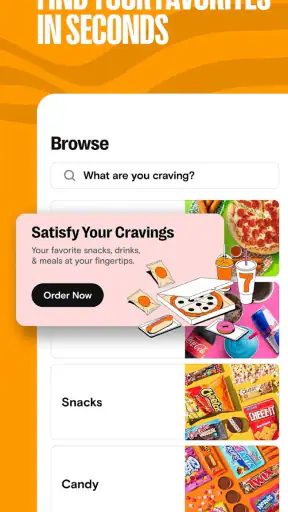
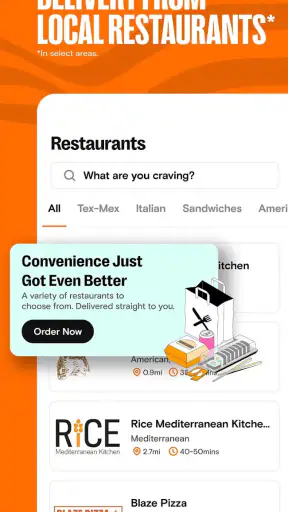
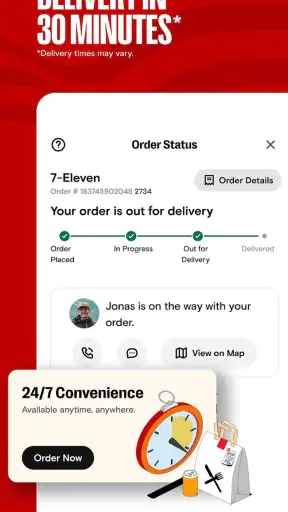
I tried 7NOW with a simple question in mind: is a convenience-store delivery app genuinely useful, or is it just another way to pay for something I could pick up myself? My answer is fairly clear. This is a practical Food & Drink app for moments when speed and convenience matter more than finding the widest selection or the lowest possible total. It is built around ordering everyday convenience items, including beer, snacks, and other products, rather than replacing a full supermarket shop.
The app comes from 7-Eleven, Inc., and its store summary focuses on ordering around the clock. That positioning makes sense in real life. I see the strongest use case when I am already at home, do not want to leave, and need a small number of items without turning the trip into a larger errand. I would not treat it as my main grocery-shopping tool, but I can see why someone would keep it installed for those awkward gaps between regular shopping trips.
What the free download really means
The app itself is free to download, which is the clearest part of its value proposition. That makes trying it relatively low-risk: I can install it, browse what is available, and decide whether the service fits my routine without paying for the app upfront. The free access should not be confused with free delivery or free products, though. The cost of an order depends on what I choose and the checkout details shown for that purchase, so I judge the app by the convenience it provides rather than assuming every order will be inexpensive.
That distinction matters more here than it does with many ordinary apps. A free calculator has no purchase decision waiting at the end; a delivery app does. The download costs nothing, but the real value comes from whether avoiding a trip is worth the final order total. For a last-minute snack run, I may accept that trade. For a large basket of routine groceries, I would compare the total carefully with shopping in person or using a broader grocery-delivery service.
I also appreciate that the app is not asking me to commit to a subscription merely to test the basic experience. The free entry point is useful for occasional users, especially people who only need convenience delivery now and then. If I lived close to a 7-Eleven and passed one during my normal commute, I would probably use the app selectively rather than automatically. The financial advantage is not that every order is cheap; it is that I can choose when convenience is worth paying for.
How the ordering experience fits everyday needs
The most natural workflow starts with a specific need rather than open-ended browsing. I might realize during a movie night that I have run out of drinks and snacks, or notice that I need a few convenience items while I am working from home. In that situation, I would open the app, look through the available products, build a focused basket, and review the order before placing it. This is a much better fit than opening it without a plan and gradually adding items simply because they are visible.
One useful habit is to separate “I need this now” from “I should buy this for the week.” 7NOW makes more sense for the first group. A small, targeted order can save time and effort when leaving the house is inconvenient. The second group usually deserves a supermarket visit or a grocery service with a broader selection and better support for planned shopping. Treating the app as a rapid convenience option keeps my expectations realistic.
The product mix is also part of the appeal. Beer and snacks are specifically central to the app’s positioning, so it is more relevant to an evening gathering or an unplanned craving than a standard restaurant-ordering app. I would use it when I want packaged items and convenience-store basics together, rather than ordering a prepared meal from a restaurant. That difference is easy to overlook if I only think of every delivery app as interchangeable.
A realistic example would be a small gathering at home. I already have the main food, but I am short on salty snacks and drinks. Instead of making a separate trip, I can use the app to fill that gap. The value is not only the products; it is the time saved, the interruption avoided, and the fact that I do not need to reorganize the evening around a store visit. For that kind of narrow problem, the service feels purpose-built.
Where the app earns its place
My biggest positive is the way 7NOW targets the “I need a few things, not a full shop” situation. Many delivery services are designed around restaurants, while grocery platforms can feel excessive for a handful of convenience items. This app sits in the middle: it is more suitable than a restaurant app for packaged snacks and drinks, and more focused than a full grocery service for a quick top-up.
The around-the-clock positioning is another practical strength. I often think about convenience delivery outside the hours when I would normally plan a shopping trip. Whether I am returning late, working unusual hours, or simply trying not to go out, the app’s purpose is aligned with those moments. I still need to check what is available for my location and order, but the intended schedule makes it more useful for irregular routines than a service built around daytime errands.
There is also a psychological benefit to keeping the basket small. When I use a large grocery service, I can spend too much time comparing brands, quantities, and substitutes. A convenience-focused app encourages a shorter decision process. That can be valuable when the goal is to solve a small problem quickly. My tip is to decide the maximum number of items before browsing, because the ease of adding one more snack can quietly turn a focused order into an unnecessarily expensive one.
Another less obvious strength is situational flexibility. I can imagine using it for a forgotten item before guests arrive, a late-night snack when driving is undesirable, or a quick replacement for something that ran out unexpectedly. These are not glamorous use cases, but they are exactly where a convenience app proves its worth. Its value is measured in avoided hassle, not in how impressive the catalog looks.
Trade-offs I would consider before ordering
The first trade-off is obvious but important: delivery convenience can cost more than walking into a nearby store. Even when the app is free to install, the complete order cost is what matters. I would always review the checkout total before confirming, particularly for a small basket. If the delivery-related cost makes the order feel disproportionate to the items, the better choice may be a quick personal pickup.
Selection is another reason I would not use 7NOW as my only shopping option. A convenience store can be excellent for immediate basics, snacks, and drinks, but it is not the same as a supermarket aisle. If I need several fresh ingredients, specialty products, or enough food for a full week, I would choose a broader grocery alternative. The focused nature that makes this app fast can also make it limiting.
Availability can require flexibility. A product I expect to see in a physical convenience store may not be available for delivery at that moment, and the practical answer is to choose an alternative rather than build an entire plan around one item. I would therefore avoid promising guests a very specific product until I had checked the app. This is a small but useful adjustment: browse first, then make the plan.
Alcohol orders also require more attention than ordinary snack orders. Because beer is part of the service’s focus and the app carries a Mature 17+ content rating, I would expect the ordering process to be treated as an adult-oriented experience. I would keep identification and delivery requirements in mind and avoid assuming that an alcohol order will be handled exactly like a bag of chips. The app is not the right choice for anyone who cannot meet the requirements connected with an adult purchase.
The age rating is worth noting even for people who mainly want snacks. A Mature 17+ label means I would not present this as a general family app for younger users. Adults deciding whether to install it should also remember that the rating reflects the product category and ordering context, not a promise that every item is suitable for every household.
How it compares with the usual alternatives
Compared with ordering from a restaurant, 7NOW is better when I want packaged food, drinks, or convenience-store items rather than a prepared meal. A restaurant app may offer more appealing dinner choices, but it is not usually the natural place to find a quick assortment of snacks and beer. If my problem is “what should I eat for dinner?”, I would look elsewhere. If my problem is “what can I add to the evening without leaving home?”, this app is more relevant.
Compared with a supermarket delivery service, 7NOW is more focused and potentially quicker to navigate for a small top-up. The trade-off is breadth. Supermarket platforms are stronger when I am planning meals, comparing larger package sizes, or buying a substantial basket. I would choose 7NOW for immediacy and a narrow need, not for replacing a weekly grocery routine.
Compared with visiting a 7-Eleven in person, the app wins on convenience and loses on immediate control. In a store, I can see the shelves myself, notice alternatives, and leave with the products right away. With delivery, I avoid the trip but depend on the app’s available inventory and the delivery process. If the store is only a few minutes away and I am already outside, walking in is likely more sensible. If I am home with a sleeping child, working, or hosting people, delivery becomes much more attractive.
That comparison gives me a simple rule. I use the app when the avoided interruption has real value. I skip it when I am already near the store, when I need a large shop, or when the order total no longer feels reasonable for the convenience gained.
Who will get the most value from it
7NOW is a strong match for adults who regularly need small, urgent orders. People with late schedules, home-based work, limited mobility, or an unexpected shortage before guests arrive may find the service especially useful. It also suits someone who wants one app for convenience-store snacks and beverages rather than combining a restaurant order with a separate grocery trip.
Occasional users can benefit too. Since the app is free to download, I do not need to be a frequent customer to justify keeping it available for emergencies or spontaneous plans. The best approach is to think of it as a backup convenience tool. I would install it before I need it, check my details when I have time, and then use it when a last-minute situation appears.
On the other hand, careful budget shoppers may prefer to skip delivery unless the time saving is significant. If I am trying to minimize every purchase cost, personal pickup will often be easier to justify. Families planning a full week of meals may also find the app too narrow, while younger users should not treat it as a general-purpose shopping app because of its Mature 17+ rating and adult-oriented product context.
The app is also less suitable for anyone who expects every order to be predictable. Convenience delivery involves choices around available products and the final checkout amount. I would recommend it to someone comfortable making substitutions or abandoning an order if the basket no longer represents good value. That is a more realistic expectation than assuming the app will always reproduce a complete physical-store trip.
Performance, maturity, and overall confidence
The app has been available since December 5, 2017, and its current version is 5.2608.0. That gives it a more established feel than a brand-new experiment. It has a 4.2 average from around 75 thousand ratings, with over a million installs, so there is clear evidence that many people have tried the service. I read those figures as signs of a familiar, actively used product, not as a guarantee that every delivery experience will be perfect.
Its store presence also lists around 15 thousand written reviews. I find that useful because a delivery app needs practical feedback from real users, especially around the difference between browsing and completing an order. Still, ratings are only a starting point. My own decision would depend more on whether the app solves my particular shopping problem and whether the final order cost feels worthwhile.
The minimum operating-system requirement is version 10, which is relevant if I am using an older phone. Before planning around the service, I would make sure my device meets that requirement and that the app runs comfortably. This is a small point, but it can prevent a frustrating situation where I only discover the compatibility issue when I urgently need to place an order.
My buy-or-skip verdict
I recommend installing 7NOW if you are an adult who values convenience-store delivery for occasional, focused orders. The free app is easy to justify as a backup, and its emphasis on beer, snacks, and everyday convenience items gives it a clearer purpose than a general delivery platform. I especially like it for the late or unexpected situations where a short trip feels much more disruptive than usual.
I would skip it as a primary grocery solution. It is not where I would plan a full household shop, hunt for the broadest selection, or assume the lowest total cost. A supermarket service is the better tool for planned buying, a restaurant app is better for prepared meals, and a personal store visit is better when the location is close and time is not a problem.
My final judgment is that the app delivers situational value rather than automatic savings. The download is free, but the purchase decision should always be based on the complete order total and the time or effort I am avoiding. When those two sides balance in my favor, 7NOW is genuinely handy. When they do not, the usual alternatives are smarter. That honest boundary is what makes it worth recommending: use it for the specific convenience problem it is designed to solve, not as a replacement for every other way of shopping.


